Street Sweeping; Sifting Through the City Propaganda
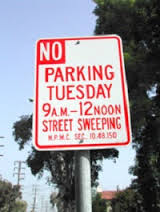 The Optimized Street Sweeping Program is once again coming before the Council this Tuesday. At the meeting, the Council will decide whether to implement the ticketing program for the remaining half of the city that has yet to see the increased signage. The program was initially discussed and approved at two meetings held in mid-2014. At the time, the city sold the program to a skeptical and disgruntled public using the following talking points:
Talking Point #1: We are being forced to do this. We have no choice.
“We have very few options here. We’re not doing it because we want to spend money…This is an environmental thing that is mandated that we do. It is not something we just came up with as our own idea.” (Mayor Scotto, April 22, 2014)
“The State Water Board has established criteria and they have allowed us no leeway.” (City Manager LeRoy Jackson, April 22, 2014)
Talking Point #2: Not doing it will lead to hefty $10,000 per day per location fines.
“If you pick and choose what you will do, and then they [the Regional Water Board] decide too much is going down the storm drain, it doesn’t matter what we say we’re getting fined and $10,000 a day is a lot of money.” (Mayor Scotto, April 22, 2014)
“A failure to comply with the regulation will result in a fine of $10,000 per day per location of each violation.” (Deputy Public Works Director Craig Bilezerian, May 20, 2014)
Talking Point #3: All cities, not just Torrance, are being forced to comply.
“I sit on a Board for a lot of the cities in LA County … In all of the discussion from other cities I haven’t heard one thing that is different from what we are doing.” (Councilman Brewer, May 20, 2014)
“This is not only Torrance. Everybody is doing this.” (Mayor Scotto, May 20, 2014)
Talking Point #4: The city will not make money off the parking tickets.
“I’ve heard a lot of comments where people say we are just doing this to raise money. That’s the furthest thing from the truth, the furthest thing.” (Mayor Scotto, May 20, 2014)
“A parking ticket [fine] is evaluated on how much it takes to write the ticket and buy the equipment. In theory that’s the exact cost it takes the city to do it so if we reduce the fine, the city would actually be losing money. (Mayor Scotto, May 20, 2014)
Talking Point #5: This will lead to cleaner streets.
Evidence is mounting, however, that these talking points are nothing more than propaganda pushed by the city in an effort to pacify residents who are upset with the proposed program.
The City of Rancho Palos Verdes, for example, continues to operate a Street Sweeping program where streets are swept only once per month and where streets are not lined with no parking for street sweeping signs. How can Rancho Palos Verdes continue with a much more lax program if supposedly the Torrance program is a mandate that every city is doing? How come Rancho Palos Verdes is not subject to those same $10,000 a day per location fines?
The answer to that may be that those fines are really only an idle threat as they have yet to materialize in Torrance despite the program being over 2 years behind schedule. Indeed, Councilman Goodrich had an exchange with city staff last December that appeared to contradict the city’s previous position on the subject.
The discussion at the time was whether the Council should suspend the issuance of street sweeping parking tickets during the Christmas holidays. Goodrich queried staff, “My understanding is that the fines we could be faced with should we exceed our TMDL’s are not yet in effect, is that correct?” Public Works Director Bob Beste responded by saying, “Yes, that’s correct. They are not in effect.”
 In another severe blow to the city’s stance, it would appear the increase in tickets has led to substantially more money in city coffers. The staff report for the item notes a 141% increase in the number of tickets issued since the program was implemented as they went from 6,801 citations in 2014 to 16,416 in 2015. At the $44.34 rate that the city receives for each ticket the amount equates to $727,885.44 received in 2015.
This increase in revenue has apparently come with no corresponding increase in costs to administer the program as the the same staff report acknowledged that:
“There have been no increases in staffing in both the Public Works and Police Departments, nor has the city added vehicles to its fleet since the program inception.” There are no proposed changes to do so.”
Questions also exist as to whether the program has actually even led to cleaner streets. At the April 2014 meeting Public Works Director Bob Beste claimed that the street sweepers were already cleaning 220 tons of trash a month (which amounts to 2,640 tons a year). The current staff report states that the city was only able to clean 2,570 tons in 2015. Other, more technically based studies, have also criticized the efficacy of the program.
The city also initially claimed that the entire program would be funded through a $1,745,800 grant received from the proposition 84 Stormwater Grant Program and matching city funds of $517,866.04 from the Sewer Enterprise Fund. They now require an additional $809,300 from the General fund and another $145,293 from the Sewer Enterprise Fund to finish implementing the program. The completion date has also moved out from the initially planned date of December 2014 to the currently planned date of February 2017.
The significant increase in cost to implement the program as well as the cause for the 2 year delay were not explained in the city staff report.